FlexAFM and nanomotion sensing unveil cellular responses, offering new insights into bacterial behavior and potential ...


12.04.2024

Héctor here, your AFM expert at Nanosurf calling out for people to share their Friday afternoon experiments. Today I show how to obtain collagen from supermarket sausages and how to image them in Wavemode.
Collagen makes about 25% of the protein content in your body, it is part of the things (is a protein present in the connective tissue) that keep the other things connected (i.e. it is part of the scaffolding).
This means that if you are doing bio with your AFM, sooner or latter you will come across collagen.
If you want to test it, an easy way of doing so is buying sausages in the supermarket with natural skin or bio skin (i.e. made of collagen). You peel of the skin and...
Let's recap. Sausages can be an easy way of obtaining collagen for AFM tests, but you need to buy the ones with natural skin. Peel off the skin several times until you get a piece clean of meat, and in air, clamp it to the sample stage. If you want to be resilient to humidity and get good contrast images, use Wavemode with CleanDrive excitation. Look for a residue-free area, and once on the surface, try a couple of different scan areas, as there are places where the topography is mostly flat, and places with big steps or broken fibers.
I hope you find this useful, entertaining, and try it yourselves. Please let me know if you use some of this, and as usual, if you have suggestions or requests, don't hesitate to contact me.
Further reading:
Madhurapantula RS, Orgel JPRO. X-Ray Diffraction Detects D-Periodic Location of Native Collagen Crosslinks In Situ and Those Resulting from Non- Enzymatic Glycation. Accelerator Physics - Radiation Safety and Applications. InTech; (2018). http://dx.doi.org/10.5772/intechopen.71022
Gomes, V., Salgueiro, S.P. From small to large-scale: a review of recombinant spider silk and collagen bioproduction. Discov Mater 2, 3 (2022). https://doi.org/10.1007/s43939-022-00024-4
23.06.2026
FlexAFM and nanomotion sensing unveil cellular responses, offering new insights into bacterial behavior and potential ...

27.05.2026
Explore Alejandro Silhanek’s innovative spintronics research, showcasing how spin waves can be investigated leveraging ...

19.05.2026
A group of young girls from Mayfield school wanted to start a F24 electric car racing team, and Nanosurf decided to ...

08.12.2024
Learn how to make a Python code to interface your AFM with a gamepad.
01.10.2024
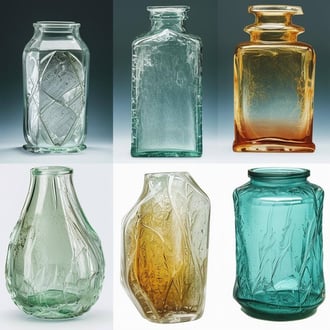
Discover how different types of glass age and degrade over time, and learn how to use AFM technology to investigate ...
11.07.2024
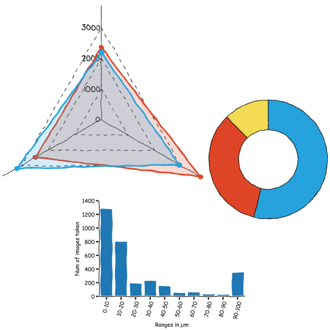
FridayAFM: learn how to perform datamining on large sets of AFM data.
Interested in learning more? If you have any questions, please reach out to us, and speak to an AFM expert.