Learn how to use DriveAFM to unlock autonomous AFM and read about the five level of autonomy of AFM systems.
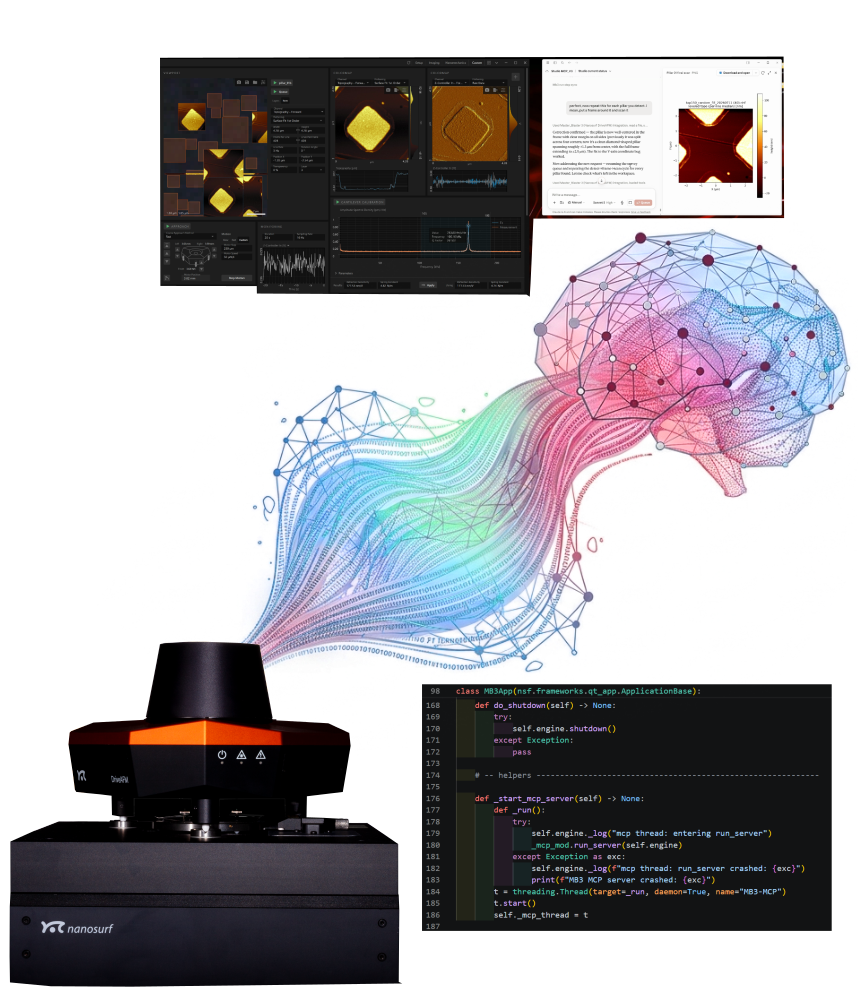

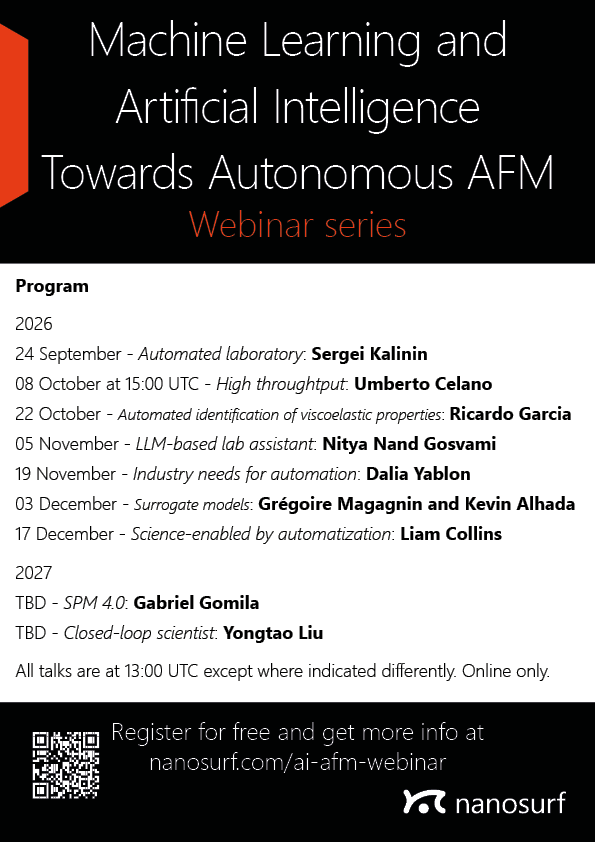
Do you want to know the future of AI and AFM? Are you curious about the state-of-the-art AFM control? Do you want to get in touch with the world leaders of autonomous AFM?
This webinar series is the event you were waiting for.
Questions? Contact us at webinar@nanosurf.com
More information about our speakers is listed below.
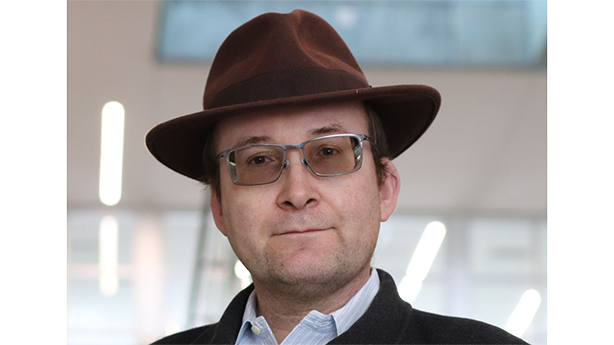
Sergei Kalinin is a Weston Fulton chair professor at the University of Tennessee, Knoxville. In 2022 – 2023, he has been a principal scientist at Amazon special projects (moon shot factory). Before then, he spent 20 years at Oak Ridge National Laboratory where he was corporate fellow and group leader at the Center for Nanophase Materials Sciences. He received his MS degree from Moscow State University in 1998 and Ph.D. from the University of Pennsylvania (with Dawn Bonnell) in 2002.
His research focuses on the applications of machine learning and artificial intelligence methods in materials synthesis, discovery, and optimization, automated experiment and autonomous imaging and characterization workflows in scanning transmission electron microscopy and scanning probes for applications including physics discovery, atomic fabrication, as well as mesoscopic studies of electrochemical, ferroelectric, and transport phenomena via scanning probe microscopy. When at ORNL, he led several major programs integrating ML/AI and physical sciences and instrumentation, including the Institute for Functional Imaging of Materials (IFIM 2014-2019), the first program in DOE integrating ML and physical sciences, and the microscopy effort in INTERSECT program that realized first ML-controlled scanning probe and electron microscopes. At UTK MSE, he participated in building one of the first efforts in the country on ML-driven materials exploration.
At UTK, his team has now realized fully AI-controlled SPM and STEM systems and co-orchestration workflows between multiple characterization tools for scientific discovery. He has also taught multiple courses on the ML for materials science and microscopy including Bayesian optimization methods. Sergei has co-authored >750 publications, with a total citation of ~65,000 and an h-index of ~125. He is a fellow of NAI, Academia Europaea, AAAS, RSC, AAIA, MRS, APS, IoP, IEEE, Foresight Institute, and AVS; a recipient of the Adler Lectureship (APS 2025), Duncumb Award (MSA 2024), Medard Welch Award (AVS 2023), Orton Lectureship (ACerS 2023), Feynmann Prize of Foresight Institute (2022), Blavatnik Award for Physical Sciences (2018), RMS medal for Scanning Probe Microscopy (2015), Presidential Early Career Award for Scientists and Engineers (PECASE) (2009); Burton medal of Microscopy Society of America (2010); 5 R&D100 Awards (2008, 2010, 2016, 2018, and 2023); and a number of other distinctions.
As part of his professional services, he organized many professional conferences and workshops at MRS, APS and AVS; for 15 years organized workshop series on PFM, and served/s on multiple Editorial Boards including NPJ Comp. Mat., J. Appl. Phys, and Appl. Phys Lett.
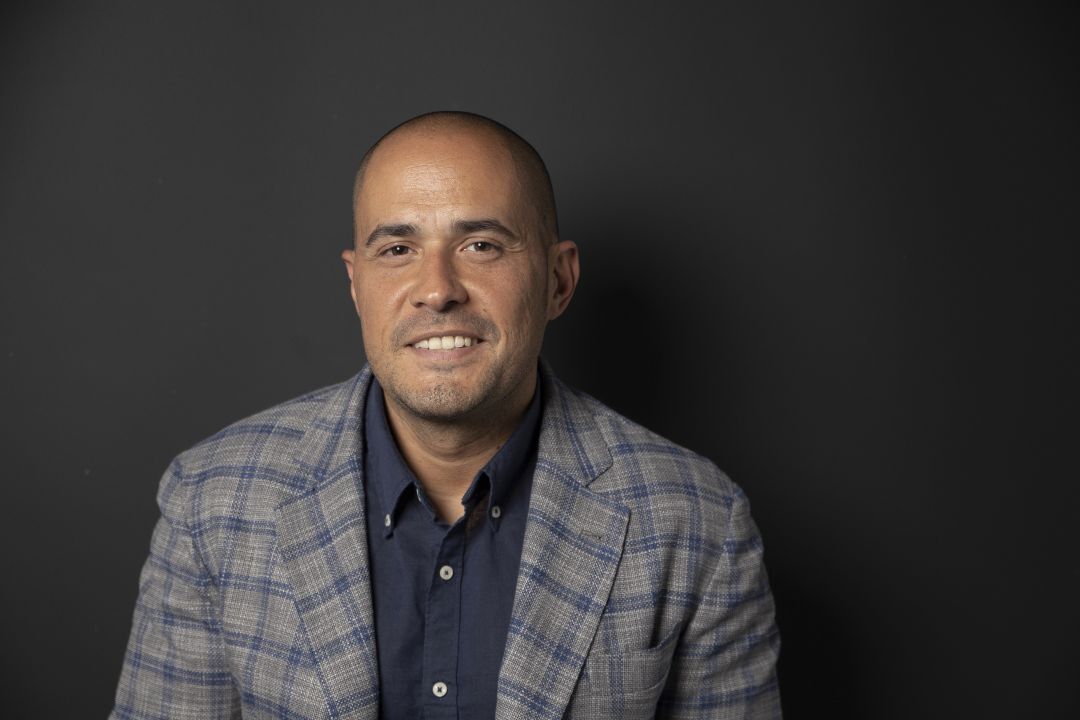
Dr. Umberto Celano is an Associate Professor at Arizona State University where he leads research at the intersection of advanced materials, semiconductors devices, and nanoscale metrology. Dr. Celano serves as metrology and characterization capability lead of the SWAP Hub for the Microelectronics Commons, and the materials characterization lead in the National Advanced Packaging Manufacturing Program SHIELD USA. Umberto is a member of the Electronic Device Failure Analysis Society (EDFAS) and co-chair of the Metrology working group in the IEEE International Roadmap for Devices and Systems (IRDS). Previously, Umberto worked in various roles to the characterization of advanced CMOS materials (logic and memory) at imec (Belgium), University of Twente (the Netherlands), and Stanford University.
Ricardo Garcia is a Professor of nanoscience and nanotechnology at the Instituto de Ciencia de Materials de Madrid (CSIC). His scientific activity combines experiments, theory and simulations to develop advanced force microscopes for the characterization of soft materials and solid-liquid interfaces. He has pioneered the development and applications of the most popular AFM mode (tapping mode AFM). RG is the inventor of bimodal AFM and organizer of the Multifrequency AFM conference series. He has also contributed to the development of Scanning Probe Lithography. RG is the author of a book entitled Amplitude modulation AFM, Wiley-VCH (2010) with editions in English and Chinese. RG is a top 0.1 % scientist according to the most comprehensive and rigorous study on scientific impact (J.P.A. Ioannidis, 2025). Garcia has received several honours such as the Prize Miguel Catalan to the Best Scientific Career by the Regional Government of Madrid (Spain, 2022) or the Nanotechnology Recognition Award by the American Vacuum Society (2016). In 2013 he was awarded an Advanced Research grant by the European Research Council. He is a Fellow of the American Physical Society. Currently he is a Professor of Nanotechnology at Spanish National Research Council in Madrid.
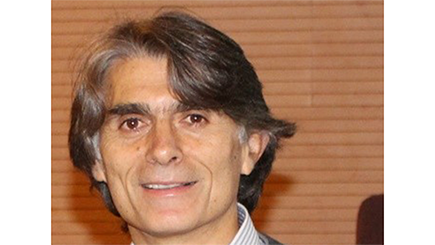
Dr. Gosvami completed his B. Tech. with honours, in Metallurgical Engineering at the Indian Institute of Technology - Banaras Hindu University (India) in 2003 and completed his PhD at National University of Singapore in 2008. During 2008-2016 he worked for various postdoctoral and scientist positions across Germany, UK and USA before joining Indian Institute of Technology Delhi (IIT-Delhi) in 2016 where he is currently working as an Associate Professor in the Department of Materials Science and Engineering. His research is focused on the study of mechanical and nanotribological behavior of engineering materials, disordered systems, and bio-inspired nano-patterned surfaces, investigating fundamental mechanisms of friction and wear, lubrication, and tribochemical processes at the liquid-solid interfaces using novel in situ Atomic Force Microscopy (AFM) techniques. He is also a recipient of prestigious international fellowships including Alexander von Humboldt Foundation (Germany) in 2008 and Fulbright-Nehru Academic and Professional Excellence Fellowships (USA) in 2025.
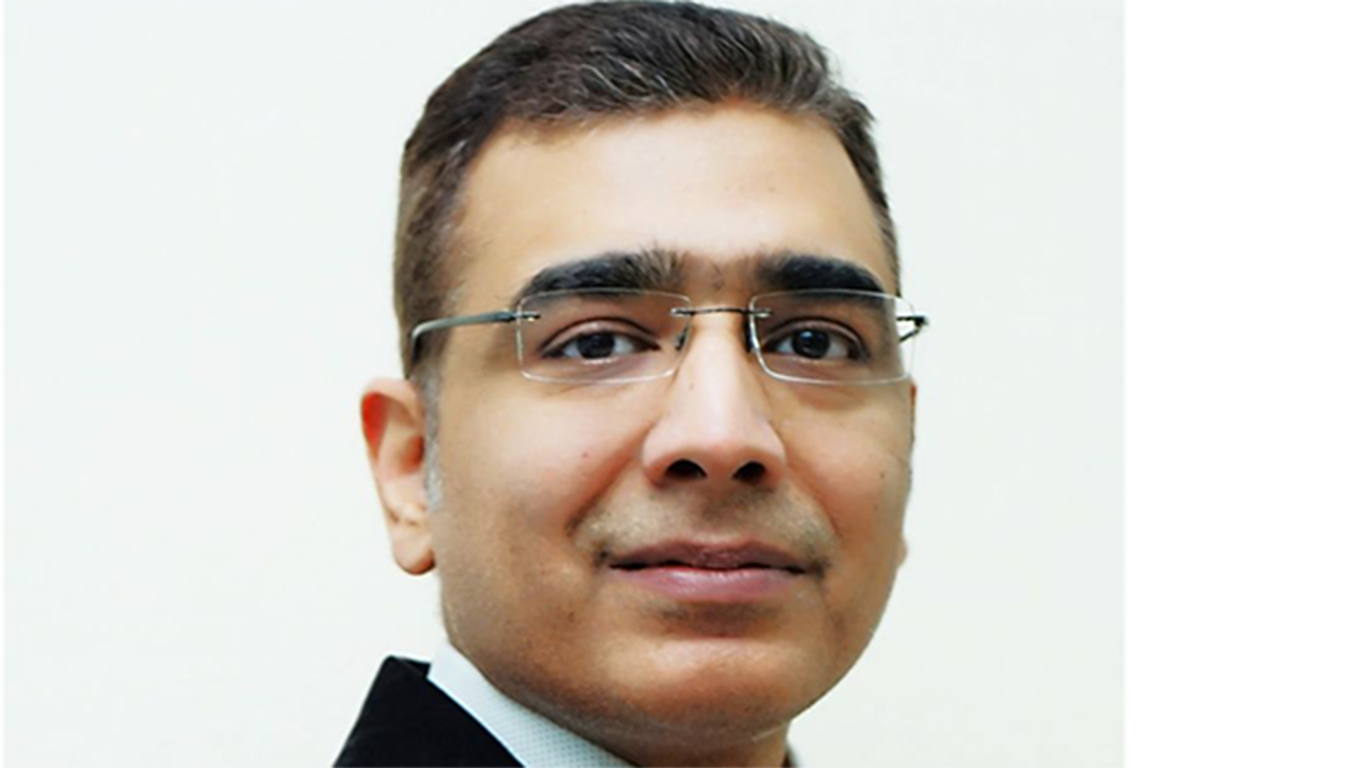
Dalia Yablon is the founder of SurfaceChar, an AFM and nanoindentation based measurement, consulting, and training company in the Greater Boston area since 2013. Dalia also serves as Technical Program Chair of TechConnect World. In addition to editing a book on “SPM in Industrial Applications” (Wiley), Dalia’s research focuses on nanomechanical characterization methods and soft material characterization. She holds an A.B. in Chemistry from Harvard University and a Ph.D. in Physical Chemistry from Columbia University.
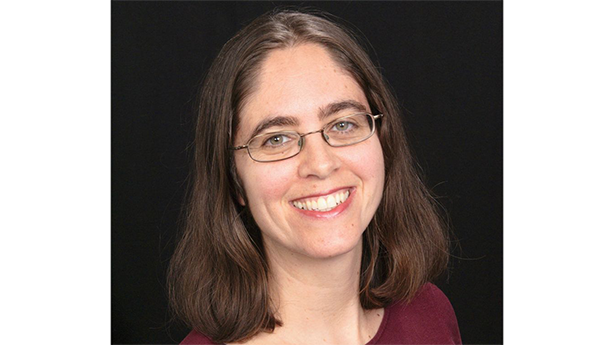
Grégoire Magagnin is a physicist specializing in the multi-scale characterization of functional oxide thin films and emerging devices. He obtained an engineering degree from École Centrale de Lyon and a master’s degree in nanosciences, before completing his Ph.D. at Université Paris-Saclay / CEA Saclay on the electromechanical control and characterization of ferroic domain walls. His doctoral work combined advanced synchrotron-based microscopies, including PEEM/LEEM and X-ray linear dichroism, with nanoscale analysis of ferroelastic and ferroelectric materials.
He is currently a postdoctoral researcher at the Institut des Nanotechnologies de Lyon, where his work focuses on antiferroelectric ZrO₂ and HfO₂–ZrO₂-based thin films for high-density energy-storage capacitors and nanosupercapacitor devices. His expertise includes electrical characterization from device scale to nanoscale, automated high-throughput measurement benches, PUND-based protocols adapted to antiferroelectric switching, synchrotron measurements, and local probe techniques such as PFM, SS-PFM, c-AFM and KPFM. He also develops data-analysis and machine-learning workflows to correlate microstructure, ferroelectric ordering at the nanoscale, local electrical response and device-level performance.
Kevin Alhada is a physicist and numerical modeling expert specializing in the field of ferroelectrics. He earned his PhD by developing advanced phase-field modeling methods applicable to a wide range of ferroelectric materials, a breakthrough that laid the foundation for his subsequent research.
Currently, he is a permanent researcher at INSA Lyon, where his work bridges the gap between traditional physics-based simulations and cutting-edge artificial intelligence. His research focuses on expanding phase-field modeling capabilities and pioneering machine learning frameworks to enhance numerical simulations.
In particular, he is leading innovative projects that develop reinforcement learning (RL) agents designed to engineer and optimize the domain structures of ferroelectrics. By leveraging phase-field models as a dynamic training environment for these AI agents, his work creates a vital stepping stone for successful deployment and implementation in real-world experiments."
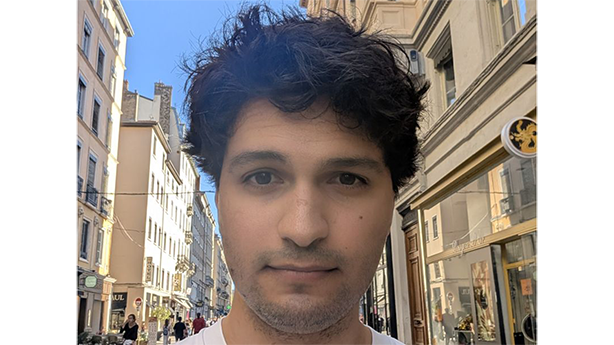
Dr. Liam Collins is a Senior Scientist at the Center for Nanophase Materials Sciences at Oak Ridge National Laboratory. He received his PhD in Physics from University College Dublin. He has over a decade of experience in AFM, is a co-inventor on several AFM-related patents and has co-organized major international SPM conferences. His work has been recognized by an R&D 100 Award, a Microscopy Today Innovation Award, the MRS Graduate Student Gold Award, and multiple ORNL staff awards. His research focuses on the development and application of advanced functional and increasingly autonomous atomic force microscopy. He develops liquid and time-resolved Kelvin probe force microscopy, quantitative piezoresponse force microscopy, and data-driven workflows that use machine learning to accelerate acquisition, recover information, and autonomously identify features of interest. His broader goal is to create smart nanoscale characterization platforms that integrate instrument control, real-time analysis, and adaptive decision-making to push AFM imaging and spectroscopy into unexplored or previously inaccessible regimes.
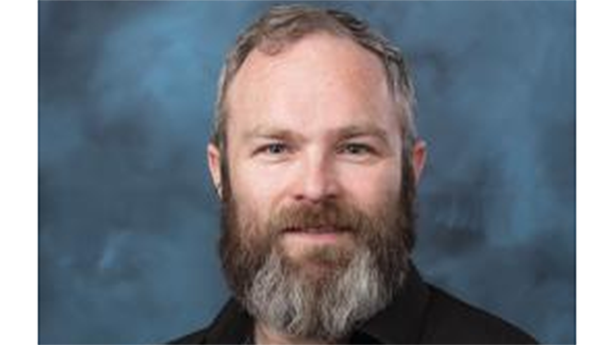
Yongtao Liu is an R&D Staff at the Center for Nanophase Materials Sciences (CNMS) at Oak Ridge National Laboratory (ORNL). He received his Ph.D. in Materials Science and Engineering from the University of Tennessee, Knoxville. His research focuses on autonomous and closed-loop experimental systems, nanoscale characterization, and the integration of AI with physics. His work has advanced the development of self-driving laboratories through AI-guided, closed-loop experimental systems. His research also emphasizes human-AI collaboration, incorporating domain expertise into AI workflows to improve interpretability, guide scientific discovery, and enable more reliable experimental automation. His contributions have been recognized with multiple awards and honors, including the Microscopy Today Innovation Award, R&D 100 Award, recognition as a Rising Star in Nanoscience, and the RMS AFM & SPM Award.
Resources
Learn how to use DriveAFM to unlock autonomous AFM and read about the five level of autonomy of AFM systems.