FlexAFM and nanomotion sensing unveil cellular responses, offering new insights into bacterial behavior and potential ...


10.05.2024

Héctor here, your AFM expert at Nanosurf calling out for people to share their Friday afternoon experiments. Today I give you some tips and tricks on how to prepare pollen to be imaged using your AFM.
April and May are the months of the bees and the flowers, this is why the topics of the last couple of fridayAFMs have been about plants. However, I think that sample preparation has been neglected a little bit on previous posts, that is why today I want to go a little bit deeper, and I went outside of the lab to prepare some samples for you.

and here is the result:
Let's recap. Pollen is a key element of the reproduction cycle of some plants and has very cool nanostructures. To image it, all you need is a glass slide and double-sided tape. Here I showed you some images of common flowers, so you know what to look for, but if you need further guidance, here is a database of pollen grains imaged with SEM. Remember that in order to image pollen with WaveMode, you should start with a large amplitude, and reduce it only if the pollen is not sticky or if the surface is flat, and always remember to have good force curves to guarantee an artefact-free image.
I hope you find this useful, entertaining, and try it yourselves. Please let me know if you use some of this, and as usual, if you have suggestions or requests, don't hesitate to contact me.
Extra:
If you want to learn more about nanomechanics, don't forget to check our new application note on how to do complex nanomechanical experiments using our Spectroscopy Plus feature for the DriveAFM: Interrogating Cell Mechanics with Spectroscopy Plus
23.06.2026
FlexAFM and nanomotion sensing unveil cellular responses, offering new insights into bacterial behavior and potential ...

27.05.2026
Explore Alejandro Silhanek’s innovative spintronics research, showcasing how spin waves can be investigated leveraging ...

19.05.2026
A group of young girls from Mayfield school wanted to start a F24 electric car racing team, and Nanosurf decided to ...

08.12.2024
Learn how to make a Python code to interface your AFM with a gamepad.
01.10.2024
Discover how different types of glass age and degrade over time, and learn how to use AFM technology to investigate ...
11.07.2024
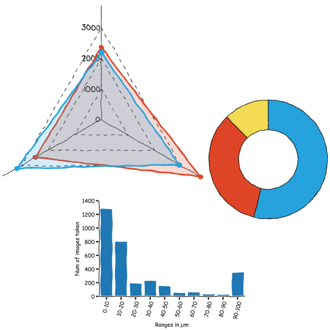
FridayAFM: learn how to perform datamining on large sets of AFM data.
Interested in learning more? If you have any questions, please reach out to us, and speak to an AFM expert.